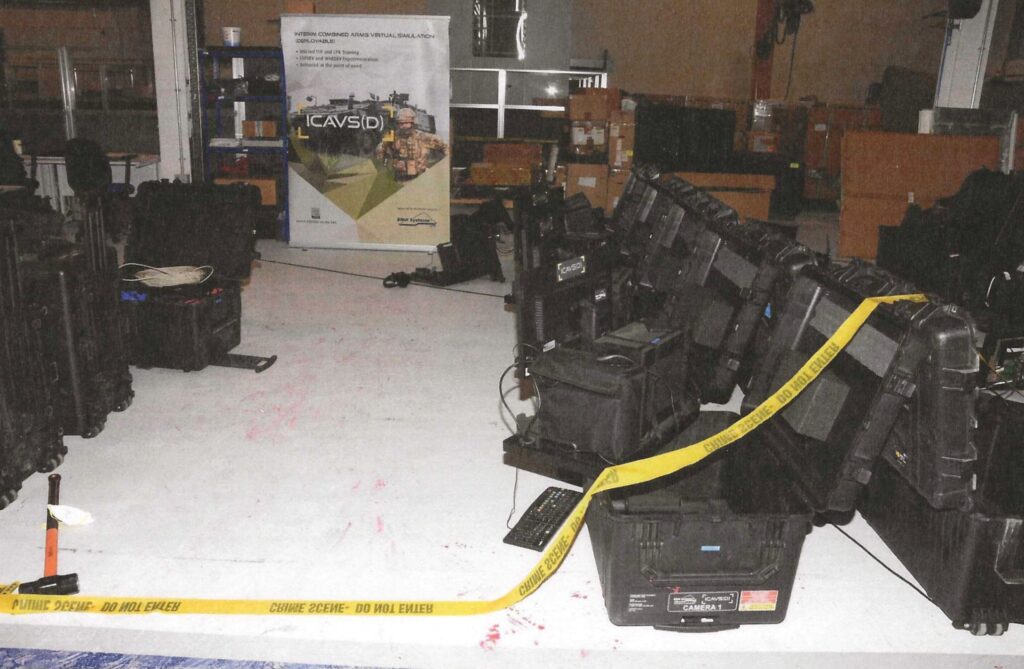
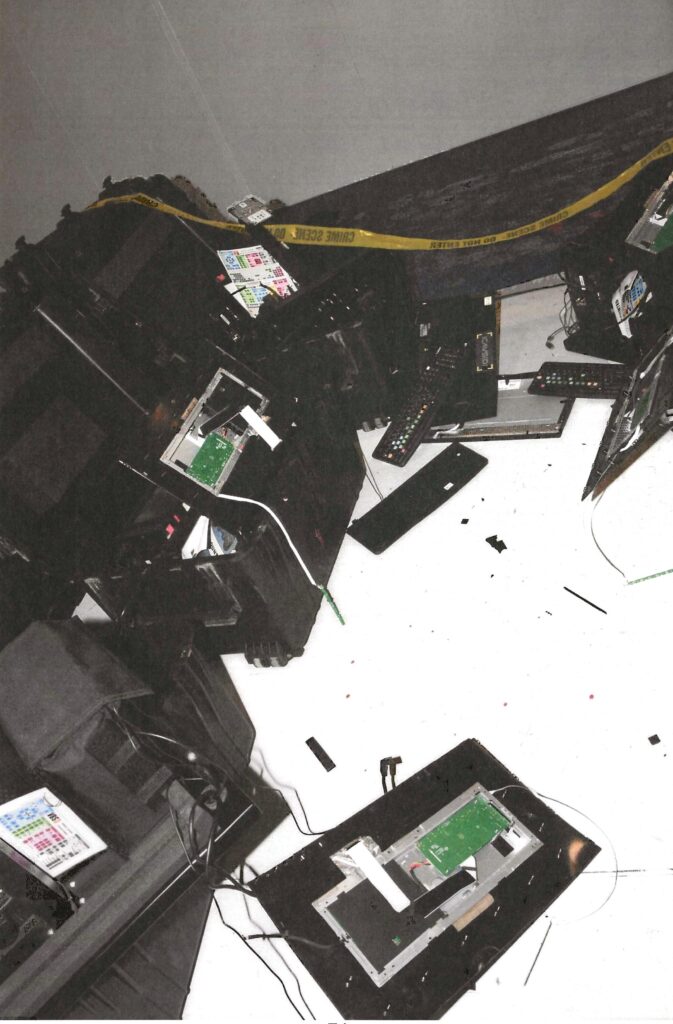
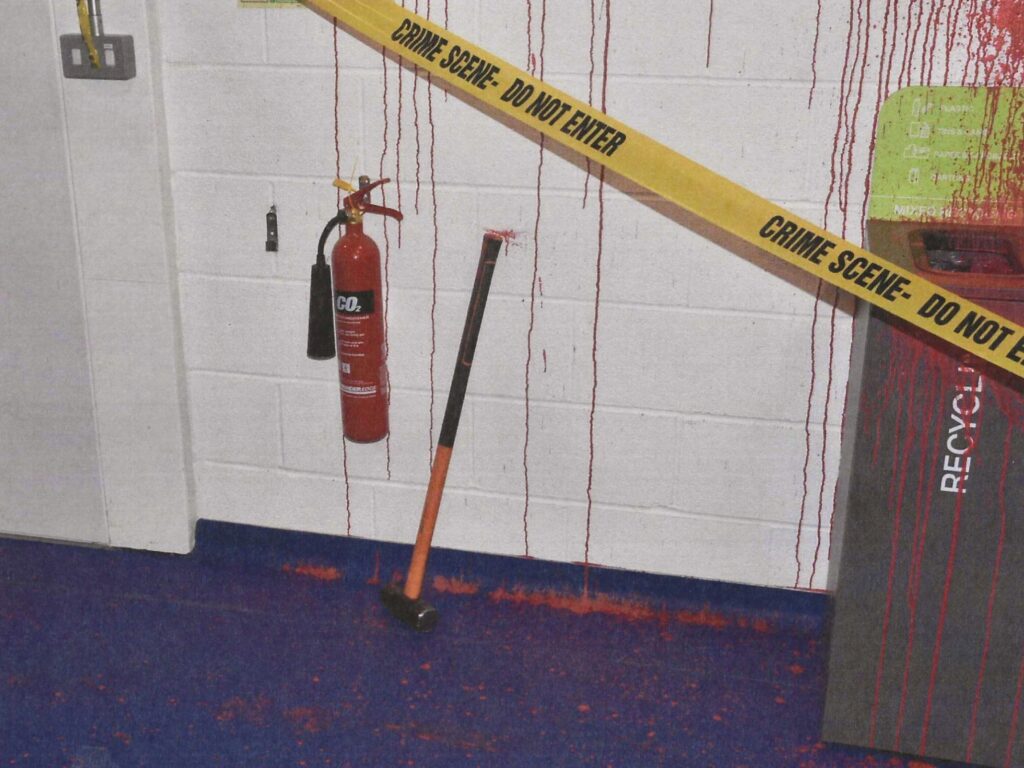
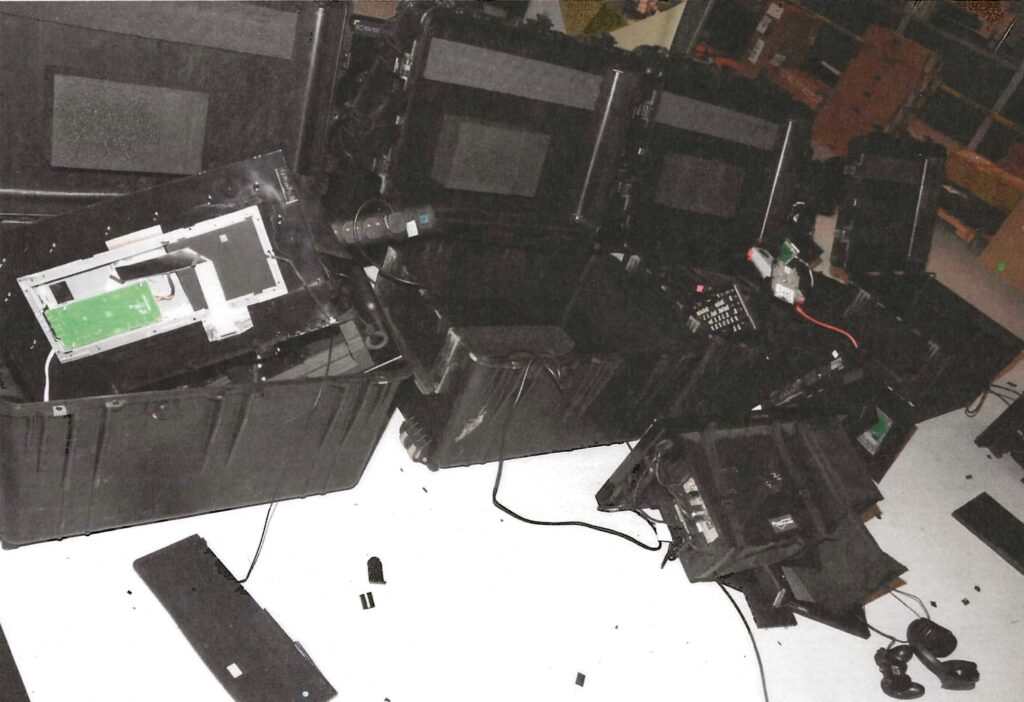
On April 29th we heard the closing defence speeches of the Filton 6 retrial, with all defendants except Sam choosing to dismiss their lawyers and represent themselves. Corner, remained represented in court by barrister Tom Wainwright of Garden Court Chambers.
Here is Mr Wainwright’s closing speech on Sam’s behalf:
There is no dispute, as Ms Heer said in Closing, that on 6th August 2024 PS Evans was doing her job as a public servant. There is no dispute that she did not deserve to be injured. Of course you will feel sympathy for her, I’m sure everyone in this courtroom does. But, you have been directed, sympathy and emotion can play no part in your decision. And yet, Ms Heer said to you in Closing yesterday that if you decide Sam Corner may have been acting in defence of another, it will be your pleasure to acquit him. A deliberate choice of words, a cheap and cynical call to emotion and sympathy. It’s not about pleasure, it’s about reaching the right, proper and true verdict.
To get to the right, proper and true verdict, let me start at the end.
“I was protecting her”. Sam Corner’s words, right at the end of the events of 6th August 2024, the events that brought him here today, give you the clearest possible indication as to what his motivation, his sole purpose and his only intention was when he swung the sledgehammer that night, and that is really what this case is about.
I was protecting her. Four words which were barely mentioned and wholly unexplained in the prosecution speech.
- There is no dispute that he said it, it was part of PS Evans’ evidence, part of the prosecution case and unchallenged by me;
- It was obviously not something he had thought about in advance and planned to say beforehand. Because it was not part of the plan for any of this to happen beforehand.
- It was not part of the plan going into the factory for him to use the sledgehammer as a weapon and the prosecution do not suggest that it was. That has never been their case in this trial;
- It was not the plan for security guards to come in to the factory;
- It was not part of the plan for Mr Corner to be PAVA sprayed;
- It was not part of the plan for Ms Kamio to be tasered and then knelt on, causing her to scream in pain;
- It was not part of the plan for him to use the sledgehammer in this way and it never crossed his mind that he would need to so there is no reason that he would have thought up a false explanation for doing so beforehand;
- Equally obviously, this was not a false explanation that he thought up on the spur of the moment. Having been taken to the floor and handcuffed, still reeling from the effects of the PAVA spray, not having realised quite what had happened, still feeling overwhelmed and confused, I don’t think any of us would have the presence of mind in those circumstances to manufacture a lie. And that would certainly be beyond Mr Corner’s ability, you may think, having seen him give evidence. You may conclude that thinking on his feet is not his strong point. That in stressful situations he struggles to articulate let alone fabricate.
The only explanation for that evidence is that this was an instinctive, truthful and accurate explanation from him of what had just happened. It is at the very heart of this case.
We are here because in the circumstances as he believed them to be, with his senses impaired and acting on instinct, Sam Corner did what he honestly believed needed to be done in order to protect someone who he thought was being seriously injured. Working back, the level of force used tells you how seriously he believed that person was being assaulted and how urgent was the need to act. Put another way, Sam Corner would not have taken this action unless he genuinely believed that it was necessary and reasonable to do so in order to prevent serious injury.
“I was protecting her”.
Every piece of evidence you have heard, every step along the path that lead him to be on that factory floor is consistent with that explanation. None of it is consistent with the prosecution explanation, such as it is, which appears to be that Sam Corner – a lifelong pacifist who had never committed an offence in his life – got frustrated and made a deliberate decision to injure a police officer for no reason.
I’m going to go through the evidence in order:
- Sam Corner’s background and character, who he is as a person;
- The planning of this action;
- The behaviour of the security guards;
- The arrival of police;
- The swinging of the hammer;
- The aftermath.
You have heard and will hear from the other defendants in relation to Count One. I’m going to focus primarily on Count Two and the allegation of Grievous Bodily Harm with Intent as that is a count faced by Sam Corner alone. And I’m going to invite you to focus on the evidence not as if you were viewing through this CCTV or BWV, not through your eyes, but through Sam Corner’s eyes and how he perceived it.
In order to do that, you need to walk a mile in his shoes, so let’s start with Sam Corner himself and what you heard about him:
- An academic, an Oxford graduate, – a mathematician, a linguist and a philosopher. Clearly very intelligent, but also noticeably someone who excels in subjects or branches of subjects which are concerned with the theoretical, not the practical. A particular sort of intelligence. Translating languages, not using them in public to communicate. Decoding words and numbers, but not applying them. Able to absorb text in the abstract in the calm of the university library, helped by his synaesthesia, but who struggles to take in unfamiliar, fast-moving, real-world events;
- A young man who cares a great deal about people. Who gives away what little he has to help others, that’s how much he cares. Who, because he finds social situations and reading social cues difficult, worries a lot – not for himself – but worries that he might say the wrong thing and make other people uncomfortable. That’s who he is. Someone who even worries about hurting other people’s feelings, let alone the idea that he may cause someone else physical pain. A young man who was moved to act for no reason other than to prevent human suffering. To stop people suffering pain, injury and trauma, not to cause it.
- A man of good character:
- Someone who had never been arrested before. Never even been in a fight before. Described in his character references as someone who finds any form of violence abhorrent. Someone who is caring, gentle, compassionate;
- Someone who has been on marches, helped out at the university encampment, but who had never been involved in any direct action, anything like this before. Who has no experience of the reality;
- Someone who had prospects. Who had plans for the following year, to continue his education. Who, you may think, was unlikely to have used unnecessary violence for that reason too. You don’t need to be a lawyer to know that this would inevitably make things much more serious. Destroying any plans, not just for the following academic year, but for a long time after that. As he told you, he would not have joined this action if he thought there was any risk of violence. He clearly never thought that he might be arrested by counter-terrorism police or spend nearly two years in prison. The possibility of violence being any part of this action simply was not on his radar, was not who he is and was not part of the plan.
You can also take into account your own impression that you formed from seeing Sam Corner in the witness box. Softly spoken, anxious, hesitant. Not someone who is verbally articulate under pressure, but this isn’t a public speaking competition and you may conclude rigid, old-fashioned cross-examination isn’t helpful. Repeatedly asking the same questions, putting hypotheticals, criticising him for answering question literally isn’t fair. Take into account the directions that you were given in relation to Mr Corner’s autism and ADHD and make all due allowance for that, although it may be that given his memory difficulties, the main point you can take away from his evidence is how he came across.
Ms Heer says to you in closing that his presentation in the witness box was very different to his presentation in the factory. Well, yes, when he was in the witness box you didn’t have Mr Warner unexpectedly running in the door, you didn’t have Ms Gargitter waving an umbrella around and you didn’t have Ms Heer hitting him in the throat with a sledgehammer – much as she may have wanted to at certain points. [Warner and Gargitter are the other prosecution lawyers]
Of course a person reacts differently in different circumstances, but that doesn’t make you a different person. You don’t throw everything you know about someone’s character out the window. That wasn’t confidence and control, that was fear and anxiety. That wasn’t bravery, it was bravado. You can hear it in his voice that he is out of his depth, scared and concerned and he is doing what he needs to do to defend himself and others, and no more.
Ms Heer seeks to undermine his character by saying that he has declined to take responsibility for his actions. Well I imagine she says that in every trial where a defendant has had the temerity to plead Not Guilty. It doesn’t actually help you.
Actually, putting together everything you know about Sam Corner – his character, his demeanour, his personality. None of it is consistent with the prosecution case.
So let’s turn to the plan. I only need to deal with this briefly as it has only featured briefly and most, if not everything, that the defendants have told you about it hasn’t been challenged. So just three points:
- There has been no challenge to the defendants’ evidence that they were repeatedly told that security guards wouldn’t come in, that they would just call the police and leave them to it, and no challenge to the defendants’ evidence that they believed it. In fact there has been no suggestion that this isn’t what has happened in every other previous action. And so the prosecution can’t say Sam Corner didn’t believe that or even say he would be naïve to believe it, because for all we know it’s true. We certainly know that these defendants were reliant on what they were told by others, none of them having been involved in anything like this before. Particularly for Sam, who has perhaps rigid thinking and difficulty in seeing things from other people’s perspective, the chances of security guards coming into the factory would have seemed negligible, the reasoning for them doing so unfathomable;
- Know from the planning that Sam Corner agreed to wear the GoPro, so he has in mind before he goes in and while he is in that factory that everything he is doing is on film. He would be conscious of it because he is supposed to be looking for intelligence on Elbit’s activities. And as a matter of common sense, you wouldn’t unlawfully assault someone if you know that you were wearing a GoPro which was recording your every action. Even if it is being transmitted rather than recorded on the device, there is still a risk that the authorities may obtain it or intercept it or even recover it after it has been deleted. You wouldn’t do anything unless you genuinely thought it was justified. If it had crossed his mind, he would have known that using unjustified violence would not help Palestine Action’s cause. Obviously it wouldn’t, quite the opposite. It would be used against Palestine Action by those who want Elbit’s factories to continue unchallenged;
- There is no mention in the planning of a fundamental part of the prosecution case. That it was part of the plan, if detained, to shout and scream and pretend to be injured. Everything else is planned out, but not this. There was no such plan. The prosecution have just made it up to try and explain Ellie Kamio’s actions and Sam Corner’s instinctive response. To protect her.
The planning is not consistent with the prosecution case.
And then we come to what happens in the factory and when the plan goes wrong and security guards start coming into the factory. Even then, Sam Corner does not use his sledgehammer to strike or injure or incapacitate any of them. To try and get them out of the warehouse or to protect himself and others.
Even during whatever happens with Mr Luke at the start. There is obviously something happening off camera, you can hear Charlotte Head screaming. If Sam Corner had wanted to lie to you he could have said anything about what Mr Luke did at that point, but he hasn’t. He’s told you can’t remember.
Even when Mr Shaw comes in and, you can see if you pause the footage, has his umbrella raised and you can see later on when you line the footage up, raises his umbrella which causes Mr Corner to raise his sledgehammer. It’s not about how much of a threat Mr Shaw posed, Mr Shaw was in the factory and wasn’t leaving. Sam Corner couldn’t turn his back on him as he didn’t know what he’d do. Sam wanted to get on with damaging weapons and wants Mr Shaw to leave but at no stage does he even nudge him with the sledgehammer, he tried to dissuade him – “you’ve only got a fucking umbrella”. When he raises the umbrella he knocks it back down, it doesn’t appear he does so very hard as the umbrella doesn’t seem broken afterwards.
Even when Mr Luke is grabbing hold of Leona Kamio’s sledgehammer and she falls to her knees, Sam Corner doesn’t make contact with him.
Even when Mr Shaw is still refusing to leave, he says “come with me I’ll show you how you can get out”. And when he sits down Sam just leaves him alone. This is not someone who is hellbent on violence.
Even when confronted with Mr Volante actually using physical force against Jordan Devlin, Mr Corner doesn’t use physical force in response. His response is only to try and knock the sledgehammer out of Mr Volante’s hands, so he can’t cause any further injury. He was protecting Mr Devlin. And he doesn’t strike the hammer that hard, as Mr Volante keeps hold of it. Even at that stage, he had no intention, no thought to cause injury.
If he thought the security guards were fair game, why not strike them at any of those points. That’s an important part of the prosecution case in relation to PS Evans. It is put to Sam Corner that if he thought she was a security guard he thought she was fair game to be assaulted. Well if that was the case, why is that not reflected in his behaviour to the security guards beforehand. Throughout all of these confrontations, not one involved physical contact or even attempted physical contact with the security guards themselves. Why not? Because he only did what was necessary and reasonable to do so in the circumstances as he believed them to be.
Ms Heer said to you in closing, but look at it from Mr Shaw’s point of view, look at it from Mr Volante’s point of view. But you haven’t heard from any of the security guards. If it would have helped the prosecution case, the prosecution could and would have called them to give evidence. It was said in closing that Sam Corner was not acting in self-defence in relation to the security guards, but it won’t have escaped your notice that there are no counts on the Indictment relating to Mr Shaw, Mr Luke or Mr Volante. You may decide that weakens the prosecution’s stance, and actually the interactions with the security guards do not support the prosecution case.
—
And then shortly after the police arrive. Sam knew they would arrive at some point, he didn’t know it would be then. Even if he had heard Mr Luke say that police were on their way, it doesn’t make any difference.
But you take into account all the points I made with PC Buxton and view this not through BWV or CCTV but through Samuel Corner’s eyes. The alarms are going off, there is a clingy, toxic smell – enough to make PC Buxton feel sick. Imagine the impact this is having. Remember when Sam was giving evidence and he asked about a high-pitched noise in the courtroom which I don’t think anyone else could hear. Imagine being in that situation when you are that sensitive to noise. When he tells you he was overwhelmed, he was overwhelmed. And when you are overwhelmed, you don’t take in the details.
So in the three seconds between coming round the corner and the PAVA spray being deployed, two seconds of which he is looking at what’s going on with Mr Volante and Mr Devlin, of course he wouldn’t have registered a small bit of writing saying POLICE. You can see it on the footage, it’s not that big. Even if you weren’t someone who had difficulty paying attention at the best of times, even if you were focussed on PC Buxton rather than the angry, soapy, shouty man coming towards you, even then you’d still have had difficulty distinguishing between security and police. If you look at their uniforms they are very similar, down to the similar white writing in exactly the same place, in a very similar font, saying SECURITY. No doubt that’s intentional by security to make them look like police officers to the casual observer.
Even if he had seen Leona Kamio being Tasered, that wouldn’t mean he knew these were police or that she was being arrested. From Sam Corner’s point of view, having been unexpectedly confronted with several security guards, what look like more security guards run in. One of them has just struck Jordan Devlin with a hammer, knocking him down. Security seem to be escalating things, getting heavy handed.
And the next thing he knows is that he can’t see.
You have agreed facts about the effects of PAVA spray. It’s a highly effective incapacitant. It causes temporary blindness, eyes to close and tears to run. It causes severe pain and nausea. I don’t make any criticism of PC Buxton for deploying his PAVA spray, didn’t explore with him the reasons for doing so or his perception of whether it was necessary, as it’s not about that, its simply the fact that it happened which is so important in understanding what took place afterwards. There can be no doubt that this was the effect it was having on Sam Corner from hereon in. You can see it on the footage, groaning, rubbing his eyes. He told you about the all-consuming pain. Trying to force his eyes open. And so when you view events through his eyes from now on, that vision is blurred, he is confused, disorientated.
An autistic young man, in an unfamiliar place and an unfamiliar scenario. Alarms going off. Smoke in the air. PAVA in his eyes. You may remember the evidence that was read from PC Neale who arrested Charlotte Head some time later. They said that when they started to caution her they had to stop because even then due to the alarm, the smoke and the residue of the PAVA on Ms Head, they became so disorientated that they couldn’t continue. So imagine what it was like twenty minutes earlier.
And in those circumstances, having just seen Mr Volante strike Jordan Devlin, Sam Corner turns away, and when he turns back, through blurred eyes, he sees a similar looking figure in black grappling with Jordan Devlin. Did he think it was still Mr Volante? Possibly. As Sam said in evidence, he didn’t remember this even shortly afterwards, and without any real visual memory it would be difficult to piece together what had happened. He has tried his best to help you based on what he can see on the footage but he cannot help you with the detail of what was going through his mind at the time. He very genuinely cannot remember it clearly and does not want to guess. Three important points arise from this:
- It demonstrates that the prosecution’s assertion, that he didn’t mention certain things in his interview because he has made them up since, is nonsense. If Mr Corner wanted to make up an account, to lie to you, he could have said he remembered things clearly even when he didn’t. He could have said this is what he thought and this is what he intended and I remember it all. But he has rigidly stuck to the truth, the unvarnished, honest truth. The events of that night were confusing and unclear at the time, in interview and now;
- Certainly don’t hold it against him. He is being asked to describe a fast moving scene from nearly two years ago, where it is difficult to remember exactly what was in his mind at the time, what he was aware of and thought then as opposed to what he knows and thinks now having seen the video footage, having been held in prison for 20 months. For someone who feels compelled to be accurate to the point of pedantry, if he cannot remember he isn’t going to guess. He will tell you he cannot remember;
- The fact that he can’t remember doesn’t mean that you revert to the prosecution version of events. It doesn’t make their account any more true. The burden and standard of proof still falls on them to make you sure, and you decide the case on all the evidence.
So what can you see from the footage? What inferences can you draw?
Well first of all, keep an eye on the real time. For quite some time you can see that PC Buxton is on top of Mr Devlin. You can’t see how he has hold of him or what he is doing or how it may have appeared from the outside. It is a matter of a few seconds in which Sam Corner intervenes. A matter of seconds in which he has to react.
Second, despite the prosecution saying that this was an unprovoked assault, there is no count on the Indictment alleging an assault on PC Buxton, and you may decide that weakens the prosecution’s stance.
Third, what is the evidence of injury. A single contact, causing a slight, faint bruise to his leg. Despite the prosecution case being that Sam Corner was on a rampage at this point, that is the extent of what he does.
So what do we draw from that incident. Well,
– Whether he may have begun his action while PC Buxton still had hold of Jordan and pulled his punch thereafter, perhaps slowing the swing after Jordan Devlin got up, thereby explaining the lack of real injury;
– Whether he may have believed that this was the same person who had struck Jordan once and was part of the group who were now escalating matters, using unnecessary and unreasonable force;
– Whether he feared that this person would get up and continue his attack;
His actions with PC Buxton would still be in the realms of self-defence or defence of another. But most importantly throughout this incident, even when unexpected circumstances caused him to react to something that he did not foresee, anticipate or expect, his instinctive response is reasonable and proportionate to the danger as he perceived it to be. That response is not consistent with the prosecution case.
You can certainly infer (or certainly cannot reasonably exclude the likelihood) that what he is doing is to protect or try to protect Jordan. The same thing he was trying to do just a few seconds later.
—
It is against all that cumulative background that you come to the incident with PS Evans. Let me make it very clear that neither I nor Sam Corner suggest for a moment that PS Evans did anything wrong. Quite the contrary. She was doing her duty, and commendably so. Her actions, particularly in the aftermath, checking on the welfare of others including Sam himself are a testament to her character and professionalism. There was no challenge from me to any of her evidence. No questions at all. So far as I was concerned there was no reason she had to come to court to give evidence because there is no dispute about what actually happened.
Because it is not a matter of what was actually happening, but what Sam Corner believed or may have believed was happening.
You don’t view that in isolation:
- You keep in your mind that Sam’s vision is still impaired (you can see that he is still keeping his eyes closed, trying to rub them afterwards while he is being detained by PC Buxton);
- You keep in mind the sirens, the shouting, the noise, the smell; He told you, everything about the environment was overwhelming;
- You keep in mind that he has just seen a member of security strike a fellow protestor and seemingly then struggling with them on the floor. He told you he felt scared for the others at this time because he could hear and see them being assaulted;
- You keep in mind that his reactions throughout that night have not been over the top.
You then add in Leona Kamio’s screams. You can hear them yourself of course on the BWV in the cold and clinical light of the courtroom, but imagine them happening live, nearby and with everything else going on. Even PC Buxton described them as horrible screams, something that had stuck with him even two days later when he was talking about what had happened on video. You may think it is unlikely that Sam Corner had ever heard someone screaming in pain like that before.
The prosecution case is that these were all faked, this was acting by Leona Kamio, and not just that, but also that Sam Corner knew this was fake. But that only works if this was planned in advance, and despite the fact that no-one else is following this plan, despite the fact that there is no mention of it anywhere and despite the fact that afterward Leona Kamio is completely unaware of what has happened and doesn’t believe the officer when he tells her what has happened. Despite all of that, the prosecution persist in trying to satisfy you of both of those things in order to try and convince you that Sam Corner wasn’t acting in defence of another.
You look at that footage and come to your own decision about whether this is faked. You ask yourself, even if we were to think the reaction was over the top, how was Sam to know that? And you ask yourselves what does this do for the prosecution’s credibility, what does it say about their case, that it relies on such implausibilities.
Sam Corner undoubtedly honestly believed in that moment, that one of the women was being seriously injured. You may think that was a reasonable and understandable conclusion to reach in the circumstances but whether or not that was a reasonable conclusion again doesn’t matter. It is his honest perception of the events which matters.
Now Sam Corner certainly accepts that his perception of events was wrong, that he made a terrible mistake and PS Evans was not hurting anybody. But sadly that is certainly not the perception that Sam had at the time. Whether he thought it was Ms Rajwani or Ms Kamio at the time makes no difference, possibly he transposed them in his recollection, but if he was making up an account to you he would just have said he thought it was Leona Kamio.
At the time, as he told you, what he saw was consistent with a security guard attacking a small woman and causing her serious injury. He wouldn’t have gone over there otherwise. He wouldn’t have done what he did otherwise. It is the only reason why someone with no previous convictions or history of violence, who abhors violence, would take such action. And it explains why after he did what he thought was necessary and proportionate to stop the threat, he stopped. He doesn’t keep swinging, he doesn’t follow it up with kicks or punches to PS Evans or any other officer.
He was protecting her.
Whether or not you accept that Mr Corner thought it was a security officer, may not make a great deal of difference. He clearly thought that the degree of force being used was unnecessary and disproportionate and therefore unlawful. He couldn’t see how it was being caused, he could hear it in Ms Kamio’s screams, and he would have been able to tell approximately where those screams were coming from. He genuinely believed Leona or Fatema Zainab was being caused serious injury, there was no other reason why she would be screaming in that way, and no-one suggests that it was necessary for either of them to be caused serious injury for any reason by anyone.
But you may well accept that he didn’t realise this was a police officer, because if he knew this was a police officer, he always knew it would be an end to matters at that stage. He was there as an “overt”, an arrestable. Hands up, on the ground, go floppy. Passively resist, not actively attack. Jumping ahead slightly, his actions after he is arrested do not show someone trying to continue causing damage, obviously that’s over now. They show someone in pain – from the PAVA, from the chokehold and the handcuffs – and trying to make it stop.
One swing that makes contact. It’s the second swing which tells you what he was trying to achieve. Not making contact but coming down in the area where the officer had hold of Ms Kamio while she was screaming moments before. Where whatever mechanism was being used to caused injury, whatever it was he was trying to stop was taking place.
Of course you have to determine whether the degree of force used was or may have been reasonable. Again, you decide this on the circumstances as Sam Corner believed them to be. The greater the degree of force that someone believes is being used or the more serious the injury someone believes is being caused or threatened, the greater the degree of force that is allowed in response.
But although the law defines it in these strict linear steps and definitions, as set out in your Route To Verdict, the brain doesn’t work that way. You have to respond quickly, with the tools available to hand. As His Lordship directed you:
‘If you decide that what the defendant did was, in the heat of the moment when fine judgments are difficult, no more than the defendant genuinely believed was necessary, then that would be strong evidence that the force used was reasonable.’
That is exactly what Mr Corner did. As he said, “I had to act quickly and what I did appeared reasonable based on what I thought was happening”. And may he have thought that based on that perception if he hesitated it may be too late and he had to do something rather than nothing.
The Route To Verdict directs you to consider defence of another first, before determining whether Mr Corner intended to cause Grievous Bodily Harm or Actual Bodily Harm. But although it is a slightly different question, you will need to consider what level of force Sam Corner intended to use at the first stage, because that is the measure by which you judge whether his response was or may have been reasonable. And in making that assessment, you may want to consider the following:
- I suggest you cannot be sure that he was aiming for her spine. You have heard and may have some experience yourself that sledgehammers are not easy to control. It’s not clear he has a good grip and a solid stance on that first attempt. You can see that it is the side of the sledgehammer appears to make contact with PS Evans’ back. The photograph of the bruise in evidence is consistent with that. That may suggest he doesn’t have control, that may suggest he wasn’t trying to hit as hard as he could;
- I suggest you cannot be sure that he gave any thought to the level of force used. It may not have occurred to him and if it did he may have misjudged it in the heat of the moment;
- I suggest that you cannot be sure that it crossed his mind that there was a risk of injuring bone as opposed to simply causing a bruise. That wouldn’t have been unreasonable possibility, as we know that is what happened to PC Buxton;
- The medical evidence set out in your Agreed Facts is perhaps helpful. The literature is split, some suggesting such injuries can be caused with high energy, some suggesting that it can be caused with lower energy. Such injuries can be caused in motor vehicle accidents but also in falls (no information about what type of accidents or falls we’re talking about). But is does tell you the level of force used would be moderate to severe – and I suggest that the burden and standard of proof mean that you should decide that in the defendant’s favour and conclude that the force was moderate and that’s what you’re looking at. Force. The Agreed Facts tell you that high energy would be required, but that’s not the same as force. You may need a lot of energy to create a moderate force, depending on the mechanism. You don’t know how much of that force was being added by gravity or momentum.
- And finally take into account all you know about Sam Corner. He told you and you may agree from everything you have heard, he would never think to do that to someone.
The prosecution case hinges on this being a deliberate blow to the spine, intending to damage a person’s spine, possibly even intending to paralyse someone. Is that really what you think Sam Corner intended to happen, knowing everything you know about him? Or was he doing just what was reasonable in order to protect another, in the circumstances as he believed them to be, as he said moments later.
Everything you see is consistent with what Sam Corner has told you. It is not consistent with the prosecution case.
Because what he did is what he said seconds later. “I was protecting her”. The fact that it wasn’t repeated in interview is utterly irrelevant. The fact that it is set out in the legal directions that you may conclude that he has made that account up since his interview, shows how adverse inferences from silence are at best meaningless but at worst, if wrongly applied, dangerous. The fact that the prosecution ask you to draw such a nonsensical conclusion smacks of clutching at straws and a complete lack of judgment.
Imagine yourself again in Sam Corner’s position, arrested for the first time, arrested for terrorism, held incommunicado, still trying to process what has happened. Of course he is going to follow his solicitor’s advice. The fact that he was acting in defence of another, that he did not intend to cause really serious harm and that he was overwhelmed and panicked and unable to remember is all there in the evidence anyway.
Drawing all of that together and applying the legal directions you have to the evidence you’ve seen and heard leads you to the conclusion that his actions were or may have been in the lawful defence of another and to a verdict of Not Guilty on Count 2.
—
If you don’t agree, if you are sure this wasn’t defence of another, you still take all those points I have mentioned into account when determining whether Sam Corner intended to cause GBH. The answer I suggest must be no. Sam Corner told you “I would never want to seriously hurt anyone”. The reality is it did not cross his mind, and if he did not think about it, he did not formulate any intention. It doesn’t matter if he should have thought about it, it doesn’t matter if you think the likelihood of such harm was obvious, it wouldn’t even matter if he had foreseen a risk of really serious harm.
For GBH with Intent, or Attempted GBH, he has to have intended to cause really serious harm, and that simply isn’t the case. He didn’t plan to do it beforehand, he didn’t intend to do it at the time, he didn’t realise what had happened for quite some time afterwards.
You also have to consider another aspect of this count and the various alternatives, which is whether in fact this was in fact grievous bodily harm. Really serious harm to give it it’s modern terminology.
There is no legal definition beyond that. There is no list of injuries which fall into this category. It is a matter for you to decide.
Nothing I say is intended to diminish or downplay this injury. The problem is that ‘really serious’ is not a medical term or a precise legal term. Where this may fall is in the category of serious, but not really serious. Certainly actual bodily harm, but falling short of grievous bodily harm. Entirely a matter for you, but I ask you to bear in mind the following:
- Although the bottom of the scale for really serious harm is unclear, the top of the range is anything short of death. Really serious harm covers loss of limbs, someone being in a coma, loss of sight, major organ damage, permanent disability. It does not do a disservice to PS Evans to say that this injury is not in the same category;
- The words used by the prosecution, both to open and close this case, was that this was a fracture to the spine. The choice of words is deliberate. You would very quickly, and deliberately, have been put in mind of a break snapping the spinal column in two, the thick lumbar vertebrae in two from left to right. But that is why you now have the photographs of the CT scan in your agreed facts. So you can see that it was in fact the edge of what we now know to be called the transverse process in medical terms, the little sticky out bit in non-medical terms;
- This was an injury that was not obvious. The doctor viewing the X-ray initially did not identify any bony injury. That was only identified on review some days later by a specialist radiologist. A later MRI scan showed no visible bony injury. The point here being that it wasn’t clear and obvious;
- This was not an injury which required surgery. PS Evans was advised to take pain relief if necessary and engaged in physiotherapy. The prognosis of the specialists after reviewing all the medical evidence, as set out in the Agreed Facts, is that you would expect such a fracture to heal in 6 to 12 weeks, with full healing in 3 to 6 months – and no long-term consequences.
It’s entirely up to you to determine, so that you are sure, in all the circumstances, where it falls within the range of harm. What is clear is that it is not a matter Sam Corner can agree or disagree with. He was cross-examined about whether he thinks it is really serious harm or not, and he was criticised for saying “I can’t answer that question”. But how can he answer that. It is a matter for you to decide. That is the reality and the accurate legal position. It may be an issue on which different people may come to different views. In fact, even if the prosecution and defence agreed the position, it would still be up to you to decide, and you would be entitled to disagree. For someone who takes things very literally and is concerned to be precise in his answers, that simply isn’t a question Sam Corner can answer. This was – I regret to say – a cheap trick, designed to either force him to agree with the prosecution or to make him look bad in your eyes for simply maintaining the true legal position.
His position is honestly and fairly put. He did not intend to cause that level of injury. So even if, contrary to everything I’ve set out, you conclude that this is really serious harm, I am confident you will not hold it against him for seeking to uphold your autonomy, your role, for putting that decision in your hands.
Because he trusts you to make that decision. To analyse the evidence carefully and fairly. To apply your common sense and judgment. To apply that to all the evidence – you decide whether this was really serious harm, whether his response was reasonable in the circumstances as he believed them to be, all of the issue
It is for issues like that that we have juries.
As Ms Head mentioned, there are proposals to cut juries out of Crown Court trials, to have guilt or innocence determined by Judges instead. But you will be hard pressed to find any criminal barrister, prosecution or defence, who supports that proposal. And I sincerely hope that, at the end of your time as jurors, your experience of the jury system will be a positive one, you will share our appreciation of the irreplaceable value that you bring and you will oppose the right to trial by jury being removed.
It is the only just and fair system for deciding guilt or innocence. That decision, that power should not be in the hands of one individual, who may not be properly representative of our society, who may have a singular viewpoint and narrow experience, who may bring with them conscious and unconscious bias and prejudice. Such decisions should be made by the community with your collective experience, common sense and integrity. Juries can and often do spot things that lawyers and judges have overlooked. Juries can and should be fearless and forensic. These are just some of the many reasons why our system is the envy of the world.
So perhaps the real question is, why do those in power want to take away the right to trial by jury? The reason maybe that even more so than the right to vote, the jury system gives power to the people, and power is not always given up easily. Establishing, embedding and defending the right to trial by jury that we now enjoy, the right to free and independent judgment by a panel of your peers, has been a long hard fight.
800 years ago, the Barons forced King John to agree to the right to trial by jury being in Magna Carta under threat of civil war.
400 years ago the monarchy had fought back and there was the Star Chamber, presided over by the King and his ministers. One historian later said of that period that:
‘…there scarcely occurs an instance, during all these reigns, that the sovereign, or the ministers, were ever disappointed in the issue of a prosecution. Timid juries… never failed to second all the views of the crown… it is obvious, that juries were then no manner of security to the liberty of the subject.’
That most hated and unfair court was, thankfully, abolished following the Civil War. Even 100 years ago, into the 20th century, there was indirect control perhaps, exercised by limiting who sat on a jury. Those who made the laws wanted to make sure that people who sat on juries looked and thought like them. Women weren’t allowed onto juries until 1919, and, until just over 50 years ago in 1971, jurors had to either be a property owner or a householder in a property worth a certain amount.
All of this is important, understanding that history is important. The role of the jury is not a rubber stamp. The role of the jury is quite the opposite. It is a protection against tyranny. It is a vital bulwark between the might of the state and the liberty of the individual. It is one of our essential checks and balances on which the legitimacy of the criminal justice system rests.
The prosecution, the State, must make you sure that these defendants are guilty. If they’ve done that, what you find proved and what you don’t, are all matters for you and only you to decide. You, and only you, are the people to whom the verdict is entrusted, no-one can tell you what you must do. No-one can ask you for the reasons behind your decision and as His Lordship directed you at the start of the trial it would in fact be a criminal offence for anyone to disclose what is discussed between the twelve of you in the sanctity of the jury room.
Those principles, that hard-fought independence, that solemn responsibility now falls to you to uphold and protect in accordance with your oath. Sam Corner and I trust that you will do that, and have faith that in doing so you will reach the right, proper and true verdicts in this case.