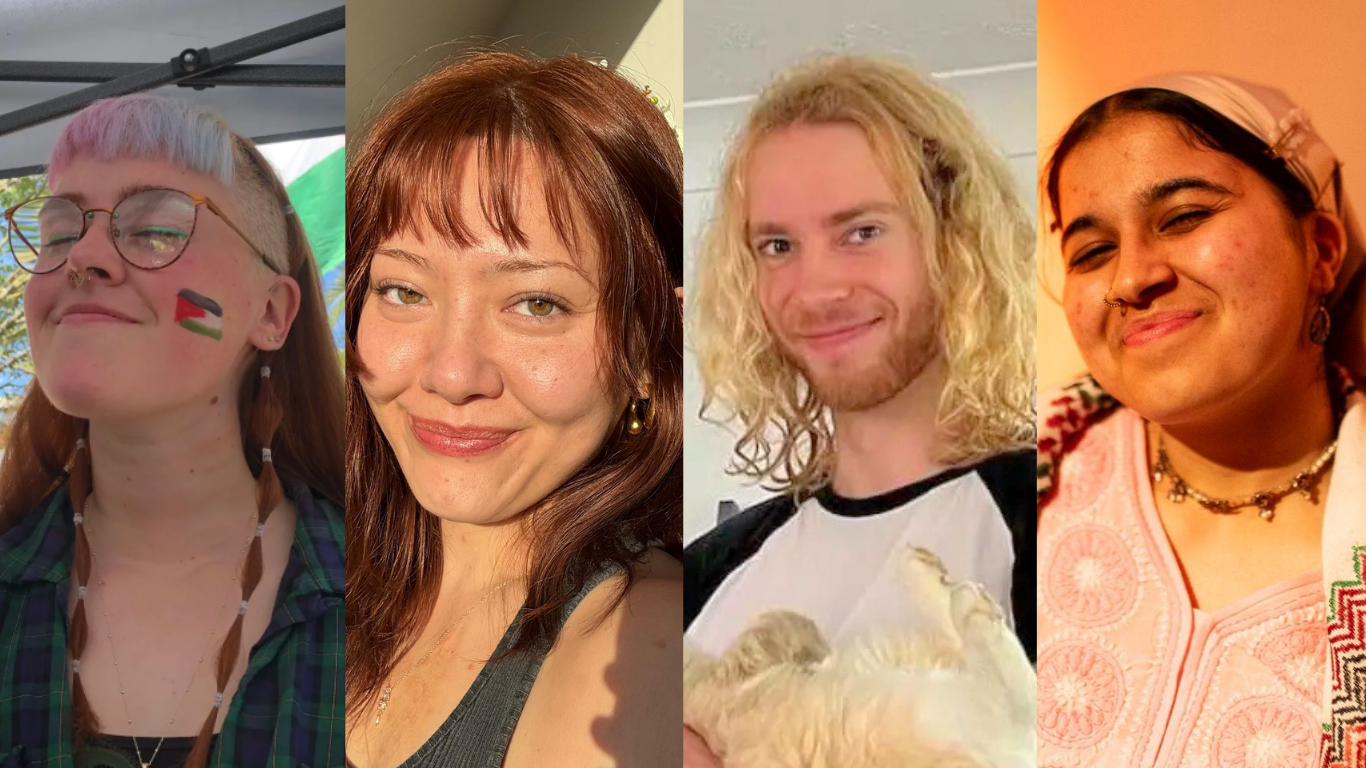
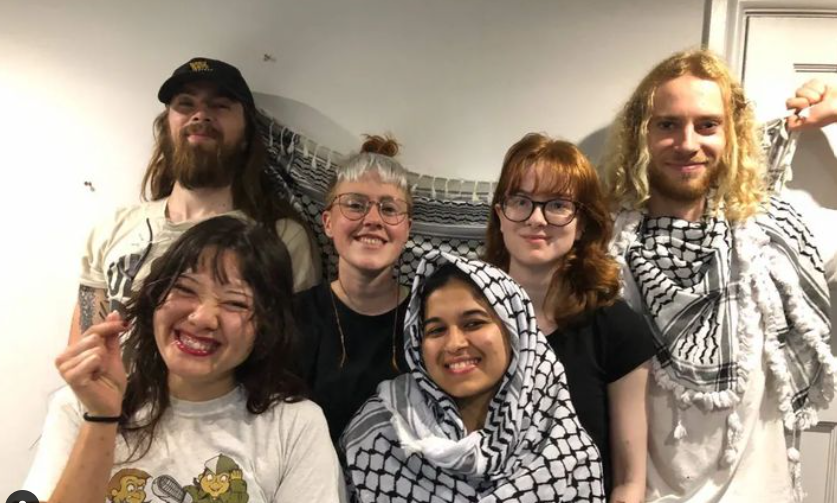
Our incredible victory on 4 February at the end of the first Filton 24 trial saw acquittals of aggravated burglary and three charges of violent disorder, not a single conviction on any other charge, and five activists out of six being granted bail. Since then, and as a direct result of a jury refusing to buy into the state and prosecution’s false narratives about our loved ones’ actions, the last two weeks have seen further massive victories for the Filton 24 campaign. The remaining 18 were also found NOT GUILTY of aggravated burglary, and 22 out of 24 were finally released from prison on bail after periods between 7 and 18 months spent in prison, far beyond usual custody time limits.
Wednesday 18th February – 5 granted bail!
On Wednesday 18th, at a court hearing at Woolwich Crown Court, the prosecution ‘offered no evidence’ against the 18 others accused of aggravated burglary on joint enterprise after the first 6 were acquitted, meaning that they were found not guilty. As CAGE International write,
The charge that once justified extraordinary remand decisions and heightened rhetoric has collapsed entirely.
The prosecution’s unevidenced and ridiculous claim that our loved ones were intending to act violently towards other people has been completely undermined.
Following this, Judge Johnson heard a number of bail applications. While the prosecution continued to object to these applications, the judge granted bail to all who applied: Aleks, Will, Ian, Maddy, and Yulia (who had a further hearing for another case before she could be released). With the same strict curfews and restrictions on phone and internet usage that the first five have been subject to, four more of our loved ones were free.
Will, Maddy and Ian had all spent 18 months in prison without trial, while Aleks had spent 15. There were celebrations at HMPs Peterborough, Low Newton and Wandsworth welcoming our loved ones to freedom.
Further jubilation followed on Friday as bail applications were heard for the remaining 11, and ALL were successful. Yulia also had her second bail hearing, which was also successful and meant she could be released.
Kamran, Zahra, Qesser, T, Heba, and Yulia spent 15 months in prison without trial. Salaam, Finn, Harley, Moiz, Louie and one other who wishes to remain anonymous spent 7. Again, over the course of the day, our loved ones were welcomed home from HMPs Bronzefield, Styal, Pentonville, Peterborough, New Hall, Chelmsford, Eastwood Park, and Elmley.
Finally, after a week of waiting for a second bail hearing for a separate case, Hannah was also released on bail. Hannah had spent 18 months in prison and was finally welcomed home from HMP Peterborough, meaning 23 of our 24 loved ones are finally free.
Sam Corner is still being held on remand in HMP Belmarsh, even though he too was acquitted of aggravated burglary and was not convicted of grievous bodily harm. We demand Sam’s freedom too. Like his codefendants in the first trial group, he was not found guilty of any crime, and should be released on bail immediately.
Unlike the first trial group who were consistently failed by the prisons and Serco who were supposed to transport and feed them, our loved ones will now have the freedom to arrive at court on time, well-rested and well-fed. Even with horrific conditions inside prison vans, regular failure to provide food and time to shower, and disproportionate security measures before and after trial days, the first 6 proved that ordinary people recognise the innocence of our loved ones and that it is Elbit who are the guilty party!
These victories also means further decisions are to be made regarding trial groupings and dates for the 18 still to be tried for violent disorder and criminal damage.
Keep an eye on our website, Instagram and mailing list for further information about trial and hearing dates, mobilising to support our loved ones as they continue to prove their integrity, morality and bravery in court, and our continued fight for freedom for Sam. While we celebrate these huge victories, our fight for all of our loved ones to be home and free where they belong and to prove their innocence continues.
Video: The moment the five freed activists stepped out of Woolwich Crown Court after 18 months in prison
Five of our six loved ones walked free at the end of the long and gruelling trial at Woolwich Crown Court on Wednesday 4 February, acquitted of the most serious charge of aggravated burglary, with acquittals or hung juries on all other charges. Only Sam Corner was refused bail and remains in HMP Belmarsh, even though he too was acquitted of aggravated burglary and was not convicted of grievous bodily harm.
The verdicts
This chart by Real Media shows the extraordinary fact that the jury did not return guilty verdicts on a single charge.
Families speak out
In a statement released on the day, family members and activists spoke about the result.
Lisa Minerva Luxx of the Filton 24 Defence committee said:
“Today’s significant victory delivered by the jury has vindicated the six defendants, who are the first six on trial from the Filton 24.
There are still 18 more defendants imprisoned across the UK in connection with this case. They are being held under joint enterprise which means they each have the same 3 charges whether they are accused of being present at the action or not. Now that the first 6 have been liberated of the most serious charge, Aggravated Burglary, and none were convicted of a single offence, it follows that the rest must immediately have this charge dropped against them, and be granted bail.
This was a trial by media. Yvette Cooper and Keir Starmer took evidence in this case out of context and broadcast it on televisions and tabloids across the country in order to justify proscribing Palestine Action as a terrorist organisation, despite forewarning that this will prejudice the trial.
By acquitting the defendants of aggravated burglary, the Jury aligned with the defence case that the items taken in to the warehouse were not weapons, but were tools used to dismantle and neutralise Israeli weapons.
Now that a court of law have vindicated the first six of the Filton 24 of the exaggerated charges against them [and found that the actions against Elbit Systems that night were reasonable], we should all expect Shabana Mahmood to do the reasonable thing herself and lift the ban on Palestine Action.
It’s time for the British state to accept that the movement for a liberated Palestine has been, and will continue to be, justified.”
Clare Hinchcliffe, mother of Zoe Rogers, said:
“Our loved one’s action against Elbit Systems and the state’s brutal response have exposed the true values of the government. The government is determined to do business with Israel and protect its weapons industry at any cost. Our loved ones dared to poke this beast – and no expense has been spared in policing prosecuting and imprisoning them without trial. Imagine if the government had put the same amount of money, resources and political will into preventing a genocide.
As the court heard, these are six young people of conscience and compassion. They took action against Israeli weapons manufacturer Elbit Systems in Filton, Bristol, because they could not sit by and do nothing while their country armed Israel’s genocide. They had tried everything else – marches, petitions, writing to MPs, encampments – and they could see that the government was not only breaking international law but was ignoring the will of its own people. They felt they had no option but to take action themselves, to try to save as many lives as they could.
Inside the Elbit facility, they found deadly quadcopter drones packed up ready for export, and were able to destroy some of them with crowbars and sledgehammers. These are the type of drones the Israeli military uses in Gaza to drop explosives, typically after a bomb has been dropped, to target survivors.”
Sukaina Rajwani, mother of Fatema Zainab Rajwani, said:
“”When they are told, ‘Do not spread corruption in the land’, they reply, ‘We are only peace-makers’ Indeed it is they who are the corruptors, but they fail to perceive it.” (Holy Quran 2:11-12)
I am grateful for every heart that has turned towards this movement, for every hand that has raised in prayer for us, and for every word that has amplified our voice in seeking justice for the Filton 24. Despite the state’s best efforts to silence us and oppress our loved ones; we stand united in strength and power against a corrupt government and an unjust legal system.
Our fight does not end here. We will continue to expose Elbit Systems and British complicity in genocide.”
Body worn footage shows the moment Elbit security guard Angelo Volante strikes Jordan Devlin with a sledgehammer and knocks him to the ground
Brogan Devlin, sister of Jordan Devlin, said:
“Despite having all the odds stacked against them, I can now say with the biggest smile that Jordan has been acquitted of aggravated burglary and violent disorder, and none of the defendants have been convicted of a single offence. The jury could see through the state lies, the political interference and the corruption.
Today we celebrate, tomorrow we rest, but this is not over – Angelo Volante is the name of the Elbit Systems security guard who assaulted my brother multiple times. My heart sank watching the footage of my brother unarmed, being attacked by Volante with a sledgehammer. Jordan was attempting to deescalate the situation when Angelo Volante kicked, choked, struck and even attempted to bit my brother.
The jury was shown Jordan’s black eye, bruised body and sledgehammer marks. Why was this never released to the media? Throughout the trial we have been silenced by reporting restrictions in a bid to protect Elbit Systems and its violent employees.
Angelo Volante and Elbit Systems should be the ones on trial, not my brother. Thankfully ordinary citizens of the jury could see that and so we leave today with our heads held high and our loved ones by our side.”
Emma Kamio, mother of Leona (Ellie) Kamio said:
“The police strategically released selected clips of footage during the trial, including the incident where Sam had struck a police officer. This was devoid of all context. The public were not told that Sam had just been blinded by PAVA spray and acted to protect my daughter while unable to see.
Ellie had been tasered twice at this point, the second time by accident, and the police officer who did so was dragging her up off the ground in one handcuff while standing on her abdomen and screaming at her to stay down. The whole time she had painful tazor barbs still in her arm and thigh as he dragged her around.
So she was screaming in pain, and was never resisting arrest. At this point, Samuel Corner had witnessed a security guard strike his co-defendant with a sledgehammer, and had witnessed excessive force repeatedly by the security. Whilst blinded by PAVA spray, and hearing screams from Ellie, screams which even the police described as “blood curdling”, he could only make out what he thought was a security guard, causing more pain, and did what he could to make it stop.
Striking the police officer was a terrible mistake that I’m sure Sam deeply regrets, but he simply reacted to protect Ellie when he heard the blood curdling scream that came from the second electrical current passing through her body, and all this after having witnessed the violence they experienced from the security guards that night.”
Press conference outside court
Family members including three mothers spoke at a press conference outside the court – watch it via Declassified UK on YouTube:
The first closing speech by the defence at the Filton trial was by Rajiv Menon KC, as the lead barrister, representing the first defendant Charlotte Head.
It was a powerful speech. Here are the highlights, based on our own notes as we watched from the public gallery, and Real Media’s excellent coverage which you can read for the details.
“Rajiv has a particular interest in cases involving human rights violations, miscarriages of justice, political protest and the abuse of power by the state. He was instructed in the Stephen Lawrence Inquiry, the Hillsborough Inquests, the Grenfell Tower Inquiry and the UK Covid-19 Inquiry” – Garden Court Chambers
A remarkable woman
Mr Menon began with the suffragettes.
“They understood that men would never give women the vote unless forced to do so. Asking politely was a waste of time. They organised large marches and rallies and engaged in civil disobedience and direct action. They vandalised property, chained themselves to buildings, and disrupted political meetings. When imprisoned, they went on hunger strike, leading to brutal force feeding by the authorities.”
He went on to describe how the suffragettes are celebrated today. Yet in their time, the mainstream press denounced them as extremists and terrorists.
The suffragettes are celebrated today. Yet in their time, the mainstream press denounced them as extremists and terrorists
Mr Menon said that like these remarkable women, Charlotte (Lottie) Head is a remarkable woman. He summed up her story as told during her evidence, including her selfless volunteering for three years in Calais, her work with victims of domestic abuse in London, and after October 2023, how she became involved with the campaign on Hackney Council to divest from the arms trade and Israel.
His voice broke with emotion as he said her decision to sacrifice years of her life and her education to serve others would make any parent proud.
Failure of democracy
Rajiv said it was unfair of Ms Heere in her closing speech for the prosecution to describe Lottie as a ‘lady in a hurry’ because of the short time between training with Palestine Action and the Filton action. She had in fact been trying for years to effect change within the system.
She had in fact been trying for years to effect change within the system
In the Hackney campaign, where she slept several nights a week at the encampment, she spent weeks helping activists put together a presentation to the council on why they should divest from Israeli arms firms. The council let them speak but then immediately announced their predetermined decision not to divest. They had tried the democratic route to challenge UK complicity in Israel’s genocide, and it had been a complete waste of time.
On the case as a whole, Mr Menon set out five initial points to the jury.
Palestine, and Israel’s attack on Gaza
The two years of atrocities in Gaza should not be set aside in the jury’s minds, as this had come up in defendants’ evidence in the trial.
“You may think it would be wrong, even perverse, to ignore that evidence that you’ve heard about the killing and destruction that has been taking place in Gaza now for over two years.
How can you assess the defendants’ characters, their credibility, their conduct at Filton or their states of mind at critical times in the chronology that ended in that action? How can you assess that if you ignore the wider context of what has been happening in Gaza and the impact that those events have had on these defendants?”
Palestine Action
Mr Menon said he agreed with the judge that the ‘elephant in the room’ – the proscription of Palestine Action – was not relevant to this trial. Its illegality (decided long after the Filton action) should not be held against the defendants.
He also pointed out that there was no mention of using violence in any of the planning document, that Palestine Action had carried out hundreds of nonviolent actions, and rejected the prosecution’s suggestion that violence was referred to in these plans without being ‘explicit’.
Elbit Systems
Mr Menon reminded the jury that on several occasions the judge had interrupted evidence about Elbit to say that it was not relevant to the trial – the judge had made a ruling to restrict this evidence – yet the limited amount that had emerged was ‘instructive’, and the prosecution did not say it was inaccurate or exaggerated.
“It might be important to take into account, indeed to remember at all times, that the target of this action was a massive weapons company that has played a critical role in the killing of tens of thousands of Palestinians, as opposed to, for example, a company that makes fluffy toys for children.
“the target of this action was a massive weapons company that has played a critical role in the killing of tens of thousands of Palestinians”
“How can you reach true verdicts according to the evidence if you ignore the unchallenged, uncontradicted evidence you’ve heard about this dreadful company?”
How the Filton action went wrong
The prosecution stated that the action was ‘meticulously planned’. Mr Menon agreed that in some ways it was well planned, but in many ways ‘it did not remotely go to plan’. The six were inexperienced laypeople, not trained military personnel.
“The footage from inside of the factory makes that abundantly clear. What you see in that footage is chaos, not a carefully executed plan.
You see members of the red team trying to respond to the unexpected presence of security guards as best as they can by shouting, by swearing, by lighting flares, by holding their sledgehammers in such a way to try and look as intimidating as possible without actually using them as weapons of offence. But “a plan to use the sledgehammers to injure or incapacitate the security guards if necessary”? Please – that’s not what you can see in that footage.”
Listing things that went wrong, “The final thing to go wrong was Sam Corner striking Sergeant Evans on her back with a sledgehammer. Whatever the jury decides in relation to Count Four [Sam Corner’s charge], it should obviously never have happened… it was clearly not part of a plan”
The missing Elbit CCTV footage
At the start of the trial the jury were given a plan of the factory with numbered CCTV cameras printed on it. Mr Menon pointed out that they later received the same plan with four additional cameras – 22 to 25 – handwritten on it. This was because the existence of these cameras only emerged during examination of the prosecution witnesses, and the defence team had to ask about the missing footage.
Cameras 22-24 cover areas where there was activity, including the alcove in which guard Angelo Volante interacted with several defendants.
Footage from these cameras was not downloaded by Detective Sergeant Sarah Grant when she went to the Elbit factory the day after the action. Mr Menon felt it was unlikely that this experienced police sergeant failed to notice that these particular cameras had recorded relevant activity. He felt the only other possibility was Elbit withholding the footage. But the prosecution then failed to call on anyone from Elbit as a witness to explain its disappearance.
“No Elbit witness has been called. The security guards, you will remember, were not employed by Elbit directly. They were employed by another company.
So Elbit remains in the shadows, hidden and protected, but not, ladies and gentlemen, in the corridors of power where no doubt they are welcomed, wined, and dined, whilst Charlotte and all the other co-accused in this case have been denied bail and have been locked up for 17 months.”
“No Elbit witness has been called. The security guards, you will remember, were not employed by Elbit directly. They were employed by another company.
So Elbit remains in the shadows, hidden and protected, but not, ladies and gentlemen, in the corridors of power where no doubt they are welcomed, wined, and dined, whilst Charlotte and all the other co-accused in this case have been denied bail and have been locked up for 17 months.”
After lunch, Mr Menon spoke on each of the three counts his client Lottie, and all six defendants, are charged with.
Count one: Aggravated burglary
Mr Menon started by suggesting that the charge of aggravated burglary, “this most serious of criminal charges”, given the evidence in the case, amounts to “deliberate prosecutorial overkill”.
The charge of aggravated burglary is “deliberate prosecutorial overkill”
According to the judge’s route to verdict, to find Lottie guilty, the jury would have to answer yes to this question:
“Are you sure that Charlotte had with her a sledgehammer, which at the time of entering the building, she intended to use to cause injury to or incapacitate a security guard if needed, or encouraged or assisted a co-defendant to have with them a sledgehammer, which at the time of entering the building, they both intended to be used by the co-defendant for that purpose?”
Breaking the question down, Mr Menon said they must be sure, beyond reasonable doubt, about Lottie’s intentions. And the focus is on her intentions at the point she entered the building, not any intention she may have formed later during the action. And the intention must be to injure or incapacitate – “an intention only to frighten or scare a security guard with a sledgehammer” is not enough.
Mr Menon made a number of arguments about the lack of evidence for any of this. They included:
Lottie’s good character
Given everything the court has heard about her, including her commitment to nonviolence, “It’s nonsensical to suggest that someone like her would have signed up to a plan involving the use of violence to injure or incapacitate a security guard with sledgehammers if the need arose. Everything you know about her suggests the contrary, namely that she would never have signed up to that kind of plan.”
The activists had all clearly stated they had ‘red lines’ they would not cross and were committed to nonviolence.
“To convict Charlotte of aggravated burglary, you would have to be sure that all of what she told you about her commitment to nonviolence was an elaborate lie”
“To convict Charlotte of aggravated burglary, you would have to be sure that all of what she told you about her commitment to nonviolence was an elaborate lie, and that in truth she would have been perfectly prepared to strike a security guard with a sledgehammer to injure or incapacitate if the need arose. With all due respect, how could you possibly reach that conclusion?”
Palestine Action
“You’ve heard evidence from Charlotte and the other defendants about the hundreds of previous actions by Palestine Action over the years, in relation to the absence of violence. Why on earth would they suddenly, after years, abandon nonviolent direct action and embrace a wholly different approach involving planned violence with sledgehammers against security guards?” Given their mass popular support, “Using violence against security guards would have been completely antithetical, completely contrary to the aims, objectives of this organisation and their strategy of nonviolent direct action, and not to mention utterly counterproductive.”
He concluded, “the only just verdict on the count of aggravated burglary is one of not guilty.”
Count two: Criminal damage
The indictment says: “that on the 6th August 2024, the defendants without lawful excuse, destroyed or damaged property belonging to Elbit Systems UK Ltd, intending to destroy or damage such property or being reckless as to whether such property would be destroyed or damaged.”
Lawful excuse
Here, Mr Menon referred to an ‘excellent’ question asked by a member of the jury earlier in the trial:
“If we decide that they genuinely believe that they were performing life-saving action and were morally compelled to destroy weapons they believed were going to be used to kill civilians in what they believe to be an illegal genocide, would that amount to a lawful excuse?”
He then quoted Justice Johnson’s legal directions to the jury on this question:
‘As I told you when you asked a question about this, if a defendant believed that they were morally justified in doing what they did to prevent what they thought was a genocide, then that would not amount to a lawful excuse. There is no evidence in this case of anything that is capable in law of amounting to a lawful excuse, so that is not something that you need to consider’.”
Mr Menon explained: “So it boils down to this. However strange it might seem, given the facts of the case are solely for you, judges are entitled, as a matter of law in our system, to withdraw defences from the consideration of the jury if they conclude that there is no evidence to support the defence. And that is what His Lordship has done in this case…His Lordship, as a matter of law, has withdrawn the defence of lawful excuse from your consideration.”
“His Lordship is not directing you to convict”
He went on to clarify what this means for the jury: “You could be forgiven for thinking that His Lordship is in fact directing you… to convict Charlotte, who I’ll focus on for now, of criminal damage. But you’d be wrong to think that. His Lordship is not directing you to convict. In fact, not only is he not directing you to convict, but he’s also absolutely forbidden from doing so as a matter of law. … No judge in any criminal case is allowed to direct a jury to convict any defendant of any criminal charge, whatever the evidence might be. That is the law.”
The case of Penn and Meade
Then Mr Menon told the story of a trial in 1670, when Quakers William Penn and William Meade were prosecuted for preaching to a gathering outside of a Church of England building, which at the time was unlawful. The jury was directed by the judge to find them guilty and the jury refused. They returned a verdict of not guilty.
According to Mr Menon, “The judge remanded the entire jury in custody for two days and ordered that they be denied all food and water. As the jurors were being taken from court to prison, William Penn, it is said, shouted out, “You are Englishmen, mind your privilege, give not away your right”, to which one member of the jury, Edward Bushel, replied, “Nor shall we ever do.” When the jury returned to court two days later, having not had any food or water for that period, the judge again ordered them to convict. The jury continued to refuse and returned a verdict of not guilty.
The judge fined the jury for contempt of court and remanded them in custody until the fines were paid. Eight jurors paid their fines, but four refused, and one of those was Edward Bushel, who then petitioned a higher court for what is called a writ of habeas corpus, which, if issued by the court, would result in his immediate release from custody. The higher court issued that writ, and Edward Bushel and the three others were released, establishing the right of a jury to return a verdict without fear of punishment from the trial judge.”
“Chief Justice Vaughan delivered the opinion of the court, which established the right of juries to give their verdict according to their convictions”
A marble plaque inside the Old Bailey commemorates this celebrated case, with an inscription ending in the words “Chief Justice Vaughan delivered the opinion of the court, which established the right of juries to give their verdict according to their convictions.”
Mr Menon concluded, “Putting that all together, members of the jury, you can find Charlotte and her co-defendants not guilty of criminal damage. It is a perfectly fair and proper verdict for you to return in this case.”
Count three: Violent disorder
Mr Menon explained, “The legal directions tell us that a person is guilty of violent disorder if they are present together with two or more people, that they used or threatened unlawful violence or assisted or encouraged at least three people to do so, intending those people to use or threaten unlawful violence, and if the conduct of the group taken together would cause a person of reasonable firmness at the scene to fear for their personal safety.”
The hypothetical bystander
Among other points, Mr Menon took time to explain to the jury the words ‘a person of reasonable firmness at the scene’. This person is not one of the people involved in the events of that night – not an activist or a security guard – but a ‘hypothetical bystander’. Would that person fear for their personal safety?
Mr Menon pointed out that the bystander would not see just the footage compiled by the prosecution. They would see everything that happened inside the factory that night.
“The hypothetical bystander would see that there were three burly male security guards and six young people dressed in red, four of whom were relatively small young women, present inside the factory. They’d see that one of those security guards, namely Angelo Volante, putting it as neutrally as I can, was aggressive, if not violent, towards those in red. They’d see that a number of the women in red had real trouble holding the sledgehammers, let alone swinging them when damaging property, because they were heavy. They’d see that several of the individual confrontations taking place inside the factory never became physical and merely involved lots of shouting and/or swearing.
“The hypothetical bystander would see that there were three burly male security guards and six young people dressed in red, four of whom were relatively small young women”
The hypothetical bystander would see one of the men in red, Mr Devlin, unarmed, trying to de-escalate the situation over time, and get one of the security guards, namely Mr Volante, who was armed with a sledgehammer, to calm down and leave. They’d see that most of those in red were single-mindedly focused on damaging as much property as possible, and were not a threat or a danger to them. The hypothetical bystander would see that although the people in red were on occasion armed with sledgehammers or crowbars, they were not in fact using them as weapons of offence against the security guard.”
A poem from Gaza
Finally, Mr Menon read the court a poem, after a short introduction to the poet.
“Refaat Alareer was a Palestinian poet, academic and activist… He lived in Gaza. He was married, he had six children. On the 6th of December 2023, he was killed, together with six other members of his extended family, in an Israeli airstrike, which has been widely reported by the international media as having been a deliberate surgical targeting of an apartment where he was staying. Refaat Alareer was 44 years old.
I want to end by reciting what has become Refaat Alareer’s most famous poem, as it so beautifully encapsulates in a way that I could never replicate, not only the Palestinian tragedy, but also the hope for a better future, both of which lie at the very heart of this case. The poem is called ‘If I Must Die’.”
If I must die,
you must live
to tell my story
to sell my things
to buy a piece of cloth
and some strings,
(make it white with a long tail)
so that a child, somewhere in Gaza
while looking heaven in the eye
awaiting his dad who left in a blaze–
and bid no one farewell
not even to his flesh
not even to himself–
sees the kite, my kite you made, flying up above
and thinks for a moment an angel is there
bringing back love
If I must die
let it bring hope
let it be a tale
End the nightmare
This is how Mr Menon finished his speech:
“Enough is enough.
Please, find Charlotte not guilty of aggravated burglary, criminal damage and violent disorder. These are fair and proper verdicts to return in her case. Acquit her so that she does not have to spend another day locked up behind bars.
Set her free. End the nightmare. Please. Enough is enough. Thank you so much for listening to me.”
The closing speeches of the five other defence barristers will be reported on Real Media. The court expects the jury to start deliberating on Tuesday 13 January.
Jordan Devlin (31) is the sixth and last defendant. On 17 December, his barrister Andrew Morris announced that he would not be giving evidence. Nonetheless, Jordan has featured prominently throughout the trial on the footage and in others’ evidence.
In the first week, Mr Morris cross-examined Elbit guard Angelo Volante and established that Volante had forcefully engaged with Jordan on three separate occasions.
Attacked by a security guard
On the first occasion, “Mr. Morris suggested that Volante had run down the corridor with whip in hand, screaming at Mr. Devlin who was unarmed, and inquired whether Volante had used any de-escalation training, rather than engaging in force on first contact with Devlin”. (This sequence with the whip is seen clearly on the unedited body worn camera footage.) Zoe Rogers later confirmed in her evidence that Volante ‘barrelled’ into Jordan without warning.
Mr Volante was then wielding a sledgehammer he had seized from Zoe, and Mr Morris alleged that he had struck Jordan with it. He showed the court a photograph of a round red mark on Jordan’s shoulder which he suggested was in the shape of a sledgehammer head. Mr Morris also showed the court footage from a CCTV camera where Volante’s leg is seen giving Jordan a karate kick.
Throughout this interaction with Jordan and Zoe captured on Volante’s body worn camera, Jordan is seen to be empty-handed, placing himself between Zoe and Volante, and calmly telling Volante to leave. Zoe later confirmed that Jordan’s actions had protected her from Volante, who she found terrifying.
Volante “admits he put him in a choke hold… Volante described the manoeuvre as a ‘rear naked choke hold’, which could be dangerous if not administered properly” (Real Media)
In the next encounter with Jordan, Volante “admits he then put him in a choke hold… Volante described the manoeuvre as a ‘rear naked choke hold’, which could be dangerous if not administered properly” (Real Media).
Police body worn camera footage shows the final violent engagement between them. Jordan had slipped over on the floor which was wet with fire extinguisher foam. As he got to his feet, Volante is seen running towards him and striking Jordan with the handle of the sledgehammer he is holding, causing him to fall down again.
While Volante “claims he was defending himself and trying to prevent Devlin from grabbing the sledgehammer …Morris argues that Devlin poses no threat at the time and Volante was performing an aggressive and dangerous act. Another photo showed Devlin’s bruised face and black eye, corresponding to the side of his face that Volante was accused of hitting. Volante admits that he struck him and that he fell back.”
Volante had attacked Jordan three times, and each time Jordan was unarmed
Footage also showed Jordan telling the police Volante had assaulted him and pointing at his face.
Towards the end of Mr Morris’s questions he pointed out that Volante had attacked Jordan three times, and each time Jordan was unarmed.
Volante reported a conversation between himself and Jordan after the police had arrived and all the arrests had been made. He said Jordan had likened the struggle to Star Wars, saying the activists were the rebels or the Jedi while Volante was the Empire.
“Jordan had likened the struggle to Star Wars, saying the activists were the rebels or the Jedi while Volante was the Empire”
Jordan’s comments about Star Wars led to some creativity on social media. Credit to @weaponised.apathy
Giving evidence, Lottie said she first saw Jordan again after their arrest at Westminster Magistrate’s Court, where Jordan showed her extensive bruising on his upper body. Lottie said the bruises were ‘black’ and recalls being shocked.
“Brilliant at de-escalation”
Although Jordan did not give evidence himself, five character witness statements were read out to the court.
A friend since childhood said “Jordan had always been interested in nature and the well-being of the planet and that this presented in his creativity and sustainable practices of furniture upcycling, and his veganism. They both volunteered at the local youth club, and Jordan ran arts and crafts workshops. He had recently applied for and been offered a job at Greenpeace” (Real Media).
Two of the statements were from ex-partners who have remained close friends. One of them “described Jordan as the most fundamentally uncomplicatedly kind person they’d ever known, whose sense of justice and his desire to help others always takes precedent even over any sense of self-preservation. They described how Jordan had helped them through their own mental struggles, and that they believed Jordan is a danger to absolutely nobody, absolutely no one” (Real Media).
“on multiple occasions putting himself in harm’s way to break up and de-escalate physical altercations”
Another close friend testified that Jordan is “someone who is very much against conflict of any sort, even on multiple occasions putting himself in harm’s way to break up and de-escalate physical altercations, brilliant at de-escalation and calming situations” (Real Media).
Another friend talked about Jordan’s love for animals, and how he would feed a squirrel who came to his bedroom window at his home in London, and even now in prison feeds pigeons when he can.
This ended the case for Jordan Devlin and all six defendants. The trial continues after the Christmas break on Tuesday 6 January. Detailed accounts from each day in court can be found on Real Media.
Zoe Rogers (22) was the fifth defendant to take the stand, giving evidence on 15 and 17 December. Like Fatema Zainab, she was just 20 when she was arrested, and has had 2 birthdays during her 16 months in prison. She has no previous cautions, arrests or convictions. The court also heard she has a diagnosis of autism and ADHD.
Trying to make a difference
Questioned by her barrister Audrey Mogan, Zoe explained how she became involved in protests. She used to go to the Greta Thunberg-inspired Fridays for Future marches while at school and planned to study to become an environmental data scientist. However, she chose humanities subjects for the access to further education course she took after her A-levels. She said we don’t need more information about the environment – we need political will, so she wanted to learn more about politics.
She became aware of the genocide in Gaza early on, learning just a few months in that more children had already been killed in Gaza than in a year and a half of war in Ukraine. As she studied the history, she was horrified to learn about the Sabra and Shatila camps in Lebanon, where the Israeli military attacked Palestinian refugees. Zoe described hearing that Israeli soldiers cut open pregnant women and tore their babies out, and zip-tied men’s hands behind their backs then machine-gunned them. This underlined to her that Palestinians are not safe from Israel even when they left their homeland.
“Zoe described hearing that Israeli soldiers cut open pregnant women and tore their babies out”
Zoe described how she tried to make a difference. She wrote to her MP asking him to comply with international law and stop sending weapons to Israel to be used in a genocide. The letter also asked the MP to join parliamentary calls for a ceasefire. She received a reply that read like an automated response. She also went on marches, including the second biggest in UK history, but felt that it was completely ignored by government.
Real Media: “It was clear to Ms Rogers at this point that despite the evidence from multiple international organisations that Israel’s actions were illegal, the democratic process in the UK was failing.”
“Despite the evidence from multiple international organisations that Israel’s actions were illegal, the democratic process in the UK was failing”
‘Bananagate’ continues
After the break, Zoe explained that she had not been able to eat breakfast, and she was starting to feel like she might black out. The judge ordered another break to enable her to eat, but no food was provided.
Real Media reports: “We mentioned the food issues at the start of our coverage of Day 16 before the weekend. Part of the reason for further delays and the early end of proceedings today was the continuation of those problems. When the judge requested that a court clerk provide a banana to a defendant in the dock today, the Serco staff refused, telling the court that they had got into trouble for doing so on Friday. Security rules at the court also apparently meant that packed lunches provided by the prison could not be checked and provided before 1pm. Even the intervention of the judge apparently could not overcome these obstacles to common sense.”
“When the judge requested that a court clerk provide a banana to a defendant in the dock today, the Serco staff refused” – Real Media
As a result of Serco’s refusal to hand over to the defendants’ pack lunches provided by the prison or the bananas available in the court, the trial was adjourned for the rest of the day. We learnt that Zoe did not have anything to eat until she returned to HMP Bronzefield at around 8pm that evening. This has been a problem throughout the trial.
Direct action
When the trial resumed on 17 December, Zoe explained how she came across Palestine Action. She had been struck by a David Graeber quote:
“Protest is like begging the powers that be to dig you a well. Direct action is digging it yourself and daring them to stop you.”
Given the failure of democracy she was witnessing she thought direct action had to be more effective. She put ‘Palestine’ and ‘direct action’ into a search engine and this led straight to the Palestine Action website.
“Protest is like begging the powers that be to dig you a well. Direct action is digging it yourself and daring them to stop you” – David Graeber
From the website, she learnt that Elbit Systems ‘battle-tests’ its weapons on Palestinians. She went on to read the Elbit Systems website itself, but when questioned about this, “Judge Johnson interrupted Ms Mogan telling her these questions were outside what he had suggested were relevant to the trial and asked her to move on” (Real Media).
Zoe went on to describe an online training day with Palestine Action. Slides from the training were included in the evidence bundle seen by the jury, but Zoe pointed out that all the slides had been removed that were about Elbit Systems and the history of Palestine.
A few months later in May 2024, Zoe joined an in-person training day. She said she wanted to get involved because she’d seen horrific videos of bombs being dropped on crowds in Palestine, and then armed drones being used to pick off survivors.
The training made no mention of violent offences, and Zoe said the group went on to set a red line that they wouldn’t be comfortable with violence. There was also no suggestion of confrontations with security or police.
The terrifying security guard
Ms Mogan then played the unedited footage from Mr Volante’s body-worn video camera, which shows that when he runs in screaming at the activists he has a whip in his hand – this is edited out of the police presentation of footage. Zoe became tearful as she said she was terrified – she didn’t even notice the whip, but his face and eyes looked really scary. He ran screaming at them and barrelled straight into Jordan. She confirmed later to Jordan’s barrister that he did not warn them he was about to do so. She thought he was unhinged and prepared to do anything – he reminded her of David Tennant’s evil, insane character in Harry Potter.
Ms Mogan asked about the two times Zoe is seen swinging her hammer in front of her. Real Media: “She explained that both times, Jordan was not between them so Volante had a clear sightline to her and she was frightened he would run at her. She was ‘hyperaware’ of how vulnerable she was… When she shouted ‘Get out of here’, Ms Mogan asked if Ms Rogers was trying to intimidate Volante, but she said she weighed 45kg at the time, and didn’t think for a moment that her shouting could intimidate him.”
“Volante grabbed the sledgehammer off her and pulled her to the floor”
One frame on the footage “shows Ms Rogers with her sledgehammer raised, and she explains at that moment she was using her arm to shield her own face. She remembers Volante grabbed the sledgehammer off her and pulled her to the floor.”
Questioned by the prosecution about whether swinging a sledgehammer at someone is frightening, Zoe replied that it depends on who is swinging it – if it was a child who could barely lift it, that would not be frightening. She confirmed that she had not swung the hammer at Volante but into the space in front of her, and was acting in self-defence.
Smashing drones
Ms Mogan asked why the activists had sprayed red paint around the warehouse with converted fire extinguishers. Zoe explained that the paint symbolised the blood of the Palestinians that Elbit makes its profits from. She found some Elbit drones with Fatema Zainab and Lottie, and “smashed some of them”.
Zoe explained that the Thor model of drone they found “drops explosive grenades which shoot out pellets that bounce around in bodies, ripping up multiple organs” (Real Media).
“The medical record at the police station described Ms Rogers as shocked. She said she was confused, overwhelmed and in shock, especially over the terrorism arrest. She didn’t expect to be put on remand, and was horrified while in prison, that people on social media were describing her as a ‘terrorist’” (Real Media).
This led to her writing a poem about why she had taken action. She recited the first and last few lines: “When they ask me why I did it, I tell them about the children…but I never forget to say that it was love, not hate, that called me”.
Asked what this meant, Zoe explained “I was motivated by a love for the Palestinian people, and a desire for their freedom from apartheid and occupation and genocide, not by hatred of security guards”.
Zoe Rogers said she took action against Elbit “to end British complicity in a genocide and save as many lives as possible”
Ms Mogan’s last question to Zoe was “Why did you take action against Elbit?”
Zoe replied, “To end British complicity in a genocide and save as many lives as possible.”
Three character witness statements were read. One from a college friend described her as “kind, gentle and compassionate, caring for social justice and wanting to build a better world… ‘the very best of us all’.” Another, from her mother, concluded “She might be the bravest and most selfless person I know. I am very proud to be her mother”.
That was the end of Zoe Rogers’ case, with Jordan Devlin to follow. Read a more detailed account on Real Media: Filton Trial Week 5
At 21, Fatema Zainab Rajwani is the youngest of the six defendants. She turned 20 the day before the Filton action. Despite her age and having no previous arrests, cautions or convictions, she too has spent the last 16 months in prison awaiting trial. It was her turn to give evidence on 11 & 12 December.
Wanting to do something tangible
Fatema Zainab told her barrister Catherine Oborne that since the age of 10 or 11 she has been attending peace rallies for Palestine. When the genocide started she began attending protests and signing petitions, and became involved with the student encampment at Goldsmiths University, where she was studying Media and Film. She became aware of Palestine Action at the encampment and met people who had taken direct action with them. Spurred on by the endless images from Gaza she decided to sign up for a Palestine Action training day in May 2024.
She said, “It had reached a point where I had been to every rally, signed every petition… I couldn’t take not doing anything anymore.”
“I couldn’t take not doing anything anymore.”
After a presentation on the history of Palestine and facts about Elbit Systems, the training covered different levels of direct action – low level (such as spraying paint and locking on) and high level (such as breaking in and damaging property). Fatema Zainab described how the attendees were asked to split towards the four corners of the room, according to whether they were interested in low/high level and arrestable/non-arrestable actions.
Real Media: “She felt she had tried everything like student occupations and protests and wanted to do something more tangible. She felt she was prepared to account for her actions and felt privileged enough to do so, so she went and stood in the arrestable high level corner.”
“She felt she was prepared to account for her actions and felt privileged enough to do so, so she went and stood in the arrestable high level corner.”
While the trainees were told about possible charges of criminal damage, “At no time was any suggestion of violence indicated.” Later, when the six in the ‘red team’ (who were planning to enter the factory) were discussing their roles, Fatema Zainab reported that “everyone agreed there should be absolutely no violence. Ms Rajwani was very clear that this was set as a firm boundary” (Real Media).
(The Real Media account offers a moment of light relief: “At this point a short mid-morning break was called, but as Ms Rajwani returned to the prison dock there was some commotion as one of the defendants spotted a dead mouse in there.”
Dismantling weaponry
Fatema Zainab was wearing a Go Pro camera inside the Elbit factory. This screenshot shows her in the process of dismantling an Elbit quadcopter drone with a crowbar
Asked about the aim of the action, Fatema Zainab said “To dismantle weaponry Elbit were making and which would be used to do horrific things in the genocide in Gaza…our main aim was to find drones and damage them.”
Asked about her intentions, she said: “The whole reason I was doing this is because I hate violence. I’d been seeing violence non-stop on my phone. The last thing I wanted to do was to cause more people more injury”
“I dismantled quadcopter drones with a crowbar”
Real Media: “In the next clip shown Ms Rajwani is seen with a crowbar, which was in her bag, and she is smashing up a quadcopter drone. She’s seen opening up large black boxes with more drones that she’s destroying.”
Under cross-examination, Fatema Zainab confirmed: “I dismantled quadcopter drones with a crowbar.” She also confirmed to Ms Heer that she was wearing a Go Pro camera in order to film Elbit Systems’ complicity in the genocide and other companies enabling genocide.
Terrified by Elbit security
“The next clip is from PC Buxton’s body worn video as he enters the building. Ms Rajwani is seen standing with her hands raised. She explains she’d just seen [Elbit guard] Mr. Volante hitting Mr Devlin with a sledgehammer, wasn’t at that point certain the new men arriving were police, and was very scared someone was going to hurt her. She was terrified at that point because nothing had gone to plan – she just wanted it to be over.”
“She’d just seen [Elbit guard] Mr Volante hitting Mr Devlin with a sledgehammer and was very scared someone was going to hurt her”
“The footage is played which shows Mr Volante screaming at her and Ms Head to get on the ground. Ms Rajwani describes him as having a sledgehammer in his hand and kicking out at them – her voice breaks as she remembers how terrified she was.”
Arrested as a terrorist
“The next day she was charged as a terrorist. Ms Rajwani broke down in tears in the witness stand as she remembered that week”.
[She was referring to the week the defendants were in police custody, not able to contact any of their loved ones. They were then taken to court, charged, refused bail and sent to prison.]
Fatema Zainab then listened to her barrister reading out the statement she had made at the police station, line by line, and confirmed that every part was true. It included
‘“I did not intend that for anyone to use violence nor did I encourage it”.
“I was scared when security guards came in and I wasn’t sure what to do”.
“However, I did not want anyone to use violence against them”.
“Banana republic”
Before questioning by the prosecution, the trial was held up because Serco – the private company in charge of transporting prisoners from HMP Bronzefield – had failed to provide two of the defendants with food that morning, and refused to allow them to simply be passed a banana in the dock. The judge was apparently unable to overrule Serco and this led to a 40-minute delay. Rajiv Menon KC was heard describing the court as a ‘banana republic’.
The prosecution put similar allegations to Fatema Zainab as she had for the others – that the red team had planned violence and intimidation against security guards, using sledgehammers chosen to act as weapons as well as tools, that they were expecting to commit offences that would lead to them being remanded, and so on.
Fatema Zainab’s replies consistently denied all of this. She broke down in tears as she said she had been expecting to start the third year of her course in Goldsmiths in September 2024, not to be in prison.
“A person of integrity, non-violence and responsibility”
Her case ended with five character witness statements from university lecturers and long-term family friends, including her former Saturday school teacher, who “described Ms Rajwani as a highly respectful, hardworking and very intelligent member of the community – helpful, honest and very sensible, volunteering at the local community centre helping the elderly, and as an infant teacher”.
Another described her as “a person of integrity, non-violence and responsibility – always law-abiding and conscientious, and deeply respected by her peers and community members.”
That was the end of Fatema Zainab Rajwani’s case, with Zoe Rogers and Jordan Devlin to follow. Read a more detailed account on Real Media: Filton Trial Week 4
Leona Kamio (30), who prefers to be known as ‘Ellie’, was next on the stand following Sam Corner on 9 and 10 December.
The gruelling day of a prisoner attending trial
Her barrister, Ms Hammad, began by asking her about her day.
Ellie said that as usual, she was woken up in her cell at HMP Bronzefield at 5am. Because of her dietary requirements, the prison had said they would send a packed lunch with her in the Serco prison van. She knew this might not happen “because the system is such a ‘shitshow’”, so she saved some of yesterday’s food to bring in case.
It turned out she was right – there was no food for any of the four defendants from Bronzefield – so she’d shared what she had with the others. She also hasn’t slept well for four nights because there’s a lot of shouting on her prison wing.
Why she took action
Ellie was working as a Forest School teacher up before the action, spending time outdoors with 2-4 year olds. The court later heard a glowing character witness statement from the head teacher. Before that she had spent three years performing with a band which got signed to Island Records.
In 2024, she attended a Palestine solidarity night, and that led to watching posts on social media from a Palestine journalist.
Real Media reports: “She started crying as she described some of the footage she saw. One was of a body bag of a decapitated body, and then she saw a child picking up parts of his mother’s body and putting them in a plastic bag to bury her.”
““She started crying as she described some of the footage she saw… a child picking up parts of his mother’s body and putting them in a plastic bag to bury her.”
This was when she thought more about Palestine Action, and ended up attending a training day in London in May. Here she heard from a Palestinian journalist about the history of Israel’s illegal occupation.
She described how people introduced themselves at the meeting, and a common theme emerged that people felt they had done everything they could [about the genocide], and that they felt they needed to do more. She had gone on marches and had written to her MPs and felt this had not achieved anything. She expressed an interest in a ‘high level action’.
Ellie said that ultimately, she went into the factory with a sledgehammer in order to help prevent a genocide, because the weapons being made were being sent to Israel to kill people. She had heard that Elbit’s Filton site was the newest and largest of their factories – Elbit’s “crown jewel”, opened by the Israeli ambassador herself. She confirmed that no part of the action was intended to hurt anyone.
“She went into the factory with a sledgehammer in order to help prevent a genocide, because the weapons being made were being sent to Israel to kill people”
Violence in the factory
She didn’t believe anyone at Palestine Action was intending to use violence, and she said that if she or Charlotte or Fatema had heard this they’d all have said ‘no way’, because they had DBS certificates for work.
“Ellie said she’d been following Palestine Action for years and there had never been any incident where violence was used against security. She said that is not what any of them had signed up to, it’s not what Palestine Action was about.”
As her evidence continued however, she described the violence of the Elbit security guards. Within minutes of them entering the warehouse, three of them came in, and Ellie said the scene was ‘overwhelming’.
First she said Patrick Luke had Lottie screaming on the floor, and Nigel Shaw looked like he wanted to jab her with his umbrella. But she described Angelo Volante as a “psycho, like he’d trained for this and was going to take them on”. She said he was in the alcove (where the security camera footage has not been produced) swinging a sledgehammer wildly, then seemed to suddenly have an angle-grinder and a hammer.
“She described Angelo Volante as a ‘psycho, like he’d trained for this and was going to take them on’”
Jordan was trying to calm Volante down, but Ellie said he was acting dangerously, lunging with the angle-grinder at people. She was worried he could literally cut somebody’s limb off.
Ellie’s fears about Elbit
Real Media reports:
“She felt it likely Elbit had told their security to teach Palestine Action a lesson because they were losing a lot of money due to all the actions against them. She knew they hire ex-military people, so really thought they were all going to get beaten up.
Asked why she thought Elbit would do that, Ellie said she’d watched a video of Elbit’s CEO giving a tour and boasting about how good the war had been for business. In the same promo video they interviewed employees who wore lab coats, and they said they saw themselves as civil soldiers for the Israeli Defence Force (IDF), and ‘proud to be the backbone of the IDF’.
“Ellie said she’d watched a video of Elbit’s CEO giving a tour and boasting about how good the war had been for business”
She also knew what the IDF do to Palestinians – a neighbour of her mother had been imprisoned in a Israeli prison and had directly witnessed Israeli guards raping Palestinians, and sexually assaulting them with a metal pole. She said they have no regard for human life whatsoever. So if these are the type of people that Elbit hires, they wouldn’t care about protesters for Palestine and wouldn’t care about harming her.”
Tasered twice
In police body worn video footage shown to the court, Ellie is shown being tasered, and screaming in pain. During cross-examination the officer who tasered her admitted that he had only shouted ‘Taser, taser! after discharging the taser, giving her no time to react. Then, because an attempt to taser Sam Corner didn’t work – the barbs did not connect properly – when he fires the taser again, Ellie receives a second, painful shock.
She continues shouting and struggling in the footage.
“When he fires the taser again, Ellie receives a second, painful shock”
Real Media reports: “she was in a lot of pain as she’d just been tasered, had smashed her chin as she fell to the ground, and the policeman was turning her around, which was pushing the taser barbs into her. He was pulling her arm round behind her and she was begging him to put the cuffs on the front. Ellie said he was kneeling on her and bending her wrist, all of which was painful.
Ms Hammad shows a series of injuries in Ellie’s medical report after arrests, which include quite a long list of bruises, scratches, taser wounds, and even a possible fracture on a finger. It describes sledgehammer damage to her hand, but she couldn’t remember when that happened.”
Welcome to return to her job
Finally the court heard a character witness statement from her former head teacher at the Forest School where she worked. It included:
“Since Léona has been away from the nursery, her absence has had a big impact on the children and the team. She is adored by everyone. The children, who are very young, have been upset and confused by her absence and ask about her often. Her job remains open for her, and the parents and children would love to have her back at the nursery as soon as possible.”
That was the end of Ellie Kamio’s case. The next defendants are Fatema Zainab Rajwani, Zoe Rogers and Jordan Devlin.
After Charlotte Head finished giving evidence, Sam Corner (23) was the next defendant on the stand, on 8 and 9 December.
As well as the joint charges faced by all six, Sam is charged with grievous bodily harm with intent.
His alleged assault on a police officer has been repeatedly referred to by government ministers in the press to claim that Palestine Action was a violent organisation. This was despite the evidence not yet being heard by a jury – which lawyers say was highly prejudicial to the trial. So Sam’s evidence was a key moment.
About Sam
Before Sam spoke, the judge read out a statement about his diagnoses of autism spectrum condition and ADHD. As his barrister Mr Wainwright began questioning him, the court heard that Sam feels awkward in social situations and especially worries that he might unintentionally hurt people’s feelings. He was a gifted student, with A*s at A-level, and represented the UK at the International Linguistics Olympiad in South Korea. He graduated from Oxford University with a degree in philosophy and linguistics in the summer before the Filton action.
“He had never even been in a fight”
He said he had no previous arrests or convictions and had never even been in a fight.
His awareness of events in Gaza grew as he got involved in a student encampment at his university, which held regular vigils for the people killed in Gaza. He began spending as much time there as possible, giving tours to visitors and helping where he could.
Real Media: “It [the genocide] was affecting him a lot, making him depressed, with so little that people could apparently do about it. That’s what made him think about getting involved with Palestine Action – to actually do something about it. Mr Wainwright asked whether Sam was willing to cause physical harm to another person as something he could do. Sam responded ‘no’.”
Inside the Elbit factory
Through the questioning of the defence and then the prosecution, what Sam conveyed to the court was that the action had not gone as planned. The six inside the factory – the red team or ‘overts’ – had not expected the security guards to come inside. They thought the black team or ‘coverts’ outside would be successful in their role of distracting the guards, and that entering the building would seem like too much hassle, so the guards would simply call the police and wait.
As the Elbit guards began to enter, two of whom were aggressive, Sam became more panicked and overwhelmed.
Asked if he intended to hurt anyone, Real Media reports: “He replied that they were all trying to stop people from being hurt – by bombs and grenades dropped from the drones like the ones in the factory. They weren’t there to hurt people”.
“He replied that they were all trying to stop people from being hurt – by bombs and grenades dropped from the drones like the ones in the factory. They weren’t there to hurt people”
Whenever he was asked if violence was part of the plan, or when he was asked anything about the plan, he kept repeating that the aim was to destroy weapons that would be used for genocide.
The alleged assault
Questioned about hitting Sgt Evans with the sledgehammer, Sam explained that he was overwhelmed with panic. He had just witnessed Jordan Devlin being hit in the face by a security guard with the handle of a sledgehammer and was then sprayed in his eyes with Pava spray, which the court heard earlier causes intense pain and affects vision.
“He remembers his whole face was burning like ‘a widespread nettle sting’, and he couldn’t see anything.”
He was unaware that the police had entered the factory – he thought that more security guards had arrived, as the police did not announce themselves and wore similar uniforms to security.
“He remembers his whole face was burning like ‘a widespread nettle sting’, and he couldn’t see anything”
He then heard one of the women scream (it was Ellie Kamio, who had just been tasered), and ran in her direction, thinking that she was being seriously hurt by a security guard, and wanting to do something to help. He came across Sgt Evans, who was on the floor handcuffing Zoe Rogers, and not being able to see properly thought Zoe was being attacked by a security guard. He said he was not thinking straight when he swung his sledgehammer at her back.
“Sam said that hitting anyone with a sledgehammer was never part of any plan, and that all he knew at that moment was that they were obviously hurting his friend and he was panicking and trying to stop it somehow.”
“Hitting anyone with a sledgehammer was never part of any plan, and that all he knew at that moment was that they were obviously hurting his friend and he was panicking and trying to stop it somehow”
When Evans later asked him why Sam had hit her, as she checked his handcuffs, Sam said he was protecting Zoe.
‘Devasted’
Real Media reports on how Sam described his feelings after he had been arrested: “Sam said he felt devastated – being arrested for ‘terrorism’ or GBH was not something anyone envisaged…He was trying to come to terms with the fact that he had injured a police officer – he was told about it by the solicitor that saw him – he was surprised he had been accused of GBH.”
After Sam had finished on the stand, the court heard some character witness statements. His grandfather’s included these words:
“[Sam] cares deeply for people in the world and has deep compassion. He is gentle with people and animals, putting a fly out of the room rather than swat it. He cares deeply about injustices in the world. He has never been observed with any aggressive traits and finds violence abhorrent.”
That was the end of Sam Corner’s case. The next defendants are Leona (Ellie) Kamio, Fatema Zainab Rajwani, Zoe Rogers and Jordan Devlin.
Last week the prosecution case ended and the defence began, with Charlotte (Lottie) Head being the first defendant to give evidence. For two gruelling days, 4 and 5 December, she answered questions from her barrister Rajiv Menon KC and then the prosecution, Deanna Heer KC.
The court heard that Lottie (29) spent three years volunteering in the Calais refugee camp known as the Jungle, where she witnessed abuses by the police, and was left with PTSD after incidents like giving first aid to a man who was stabbed and searching for missing children when a fire broke out in the camp. After she had moved back to the UK the news in Gaza triggered those memories and she was determined to try to do something to help.
Real Media reports: “She’d seen a video after a bombing of a father holding a decapitated small child, and thought “children can’t be terrorists”. To claim you’re precision-targeting but then kill 10,000 children was not something she could stand by and watch.”
“To claim that you’re precision-targeting but then kill 10,000 children was not something she could stand by and watch”
In June 2024 Lottie attended a Palestine Action training day on taking direct action against Israeli weapons manufacturer Elbit Systems, and after that organisers placed her in a group which became the ‘red team’ of six who took the Filton action together.
Lottie was the driver of the repurposed prison van that the team used to drive into the shutters of the loading bay and enter the warehouse.
Inside the warehouse, Lottie located some quadcopter drones. Real Media: “She said she knew Elbit were proud of having produced 85% of IDF combat drones. There were a lot more in boxes, and so she started smashing the boxes.”
Lottie was very clear that violence against people was never part of the plan – and that they were not prepared for the Elbit guards to intervene in the way they did.
Real Media: “She said they had already agreed there would be no violence – no physical harm to a person. ‘Although we’d been told security wouldn’t come in, we thought there was a chance they’d look in, and I guess we hoped they’d think ‘this is more than my pay grade’ and they’d just phone the police.’”
She said they were so confident they’d be left for hours in the factory without interference that they had packed sandwiches!
Asked about the alleged assault on a police officer, ”Ms Head said it shouldn’t have happened, she didn’t want it to happen, and it wasn’t planned to happen. As much as she didn’t agree with what the company does, no-one should have got hurt.”
“It shouldn’t have happened… no one should have got hurt”
In cross-examination, the prosecution repeatedly put to Lottie that the activists had planned to use violence against security guards and police if necessary, and their tools were also intended to be weapons. Lottie consistently replied that no, the team had agreed ‘red lines’ they would not cross, and were adamant that no one should be violent.
Two moving character statements were read out by people who had worked with Lottie. One testified that nearly every day in the Jungle, Lottie had driven camp residents to health appointments. She had also rented a flat and housed six refugees herself, sharing meals and life together with them.
You can read Real Media’s detailed account here: Week 3 (Days 10 and 11)
That was the end of Lottie Head’s case. The next defendants, in order, are Sam Corner, Leona (Ellie) Kamio, Fatema Zainab Rajwani, Zoe Rogers and Jordan Devlin.